
RFID
5 min readRFID vs Barcode for Warehouse Tracking: Which Should You Use?
A technical comparison of RFID and barcode identification for warehouse tracking, covering line of sight, read speed, cost and when each, or a hybrid, fits.
By CoEnablers Engineering · Published September 19, 2026
Introduction
Barcode and RFID are often framed as competitors, but they solve identification differently enough that the right choice, or the right combination, depends on the specific warehouse workflow rather than a general preference for one technology.
How Barcode Works
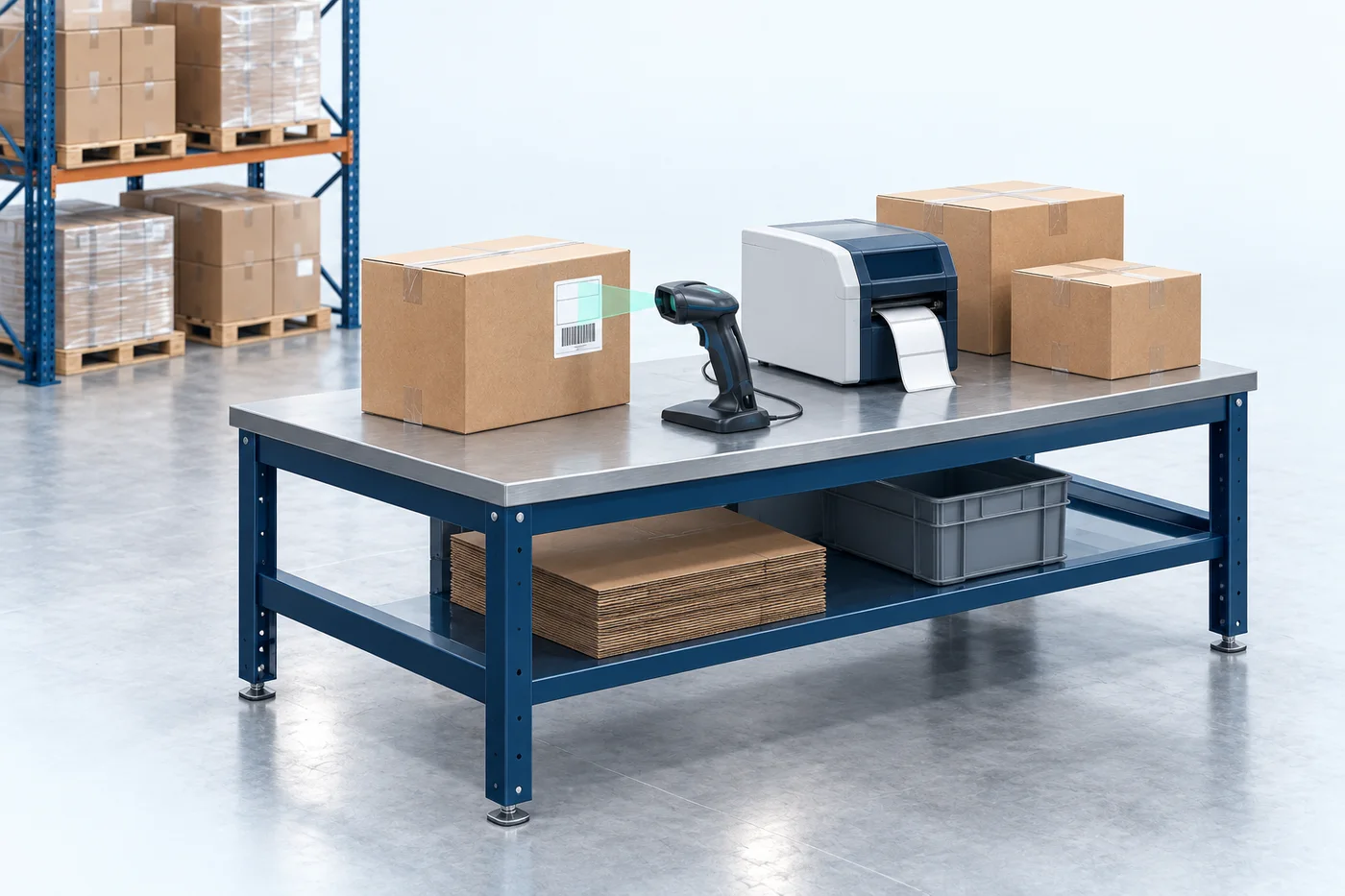
Barcode identification encodes data in a printed pattern that a scanner reads optically. The scanner, whether a handheld device, a fixed scanner or a camera-based reader, needs a clear line of sight to the barcode and typically reads one code at a time, at the moment an operator deliberately presents it.
Because the read is deliberate, barcode scanning naturally produces a strong audit trail: an operator scanned this code, at this device, at this point in the workflow. That deliberateness is a strength for tasks where confirming a specific action matters, such as putaway or pick confirmation.
How RFID Works
RFID uses a radio-frequency tag that a reader can identify without requiring a direct line of sight or, in many cases, deliberate operator action. A fixed reader positioned at a portal or gate can identify multiple tags as they pass through its read zone, and a handheld RFID reader can identify tags within its range without the operator aiming at each one individually.
This bulk, hands-free identification is RFID's main advantage over barcode, but it comes with a corresponding cost: because reads can happen without a deliberate operator action, the system needs more explicit business rules to decide when a read should be treated as a confirmed business event rather than incidental noise. If a tagged pallet moves through a controlled RFID portal, the reader may produce several raw reads for the same tag; middleware normally needs to group those reads into one meaningful pallet-movement event before posting anything to the WMS.
Key Differences
Line of Sight
Barcode requires a scanner to see the printed code directly. RFID tags can typically be read through some packaging materials and without precise aiming, though performance still depends on tag type, orientation and what is between the tag and the reader.
Read Speed and Bulk Reading
A barcode scan identifies one code per deliberate scan. A fixed RFID reader can identify many tags in its field within a short window, which matters for use cases like reading an entire pallet of tagged cartons at once rather than scanning each carton individually.
Tag and Label Cost
Barcode labels are generally lower cost than RFID tags, particularly at high volumes or where tags are applied to lower-value items. This cost difference is often the deciding factor for item-level tagging on low-margin products.
Infrastructure Cost
Barcode scanning infrastructure is comparatively simple: handheld scanners and printers. RFID infrastructure can include fixed readers, antennas and site-specific tuning, such as antenna placement, power levels and read-zone testing, that add setup cost and time beyond the tag price itself.
Environmental Considerations
Barcode scanning can be affected by damaged, dirty or poorly printed labels. RFID performance can be affected by metal, liquid and dense stacking of tagged items, though these conditions typically call for tag selection and placement testing rather than ruling RFID out entirely.
Operator Interaction
Barcode scanning is an active, deliberate action built into the workflow, which supports clear accountability for each scan. RFID can reduce operator steps for bulk identification tasks, but that same hands-free quality means the system, not the operator's deliberate action, is responsible for interpreting what a read means.
Accuracy Considerations
Barcode reads are typically unambiguous when the code is legible; a failed scan simply does not read at all. RFID can produce partial or repeated reads in busy read zones, from adjacent tags, reflections or multiple passes of the same tag, that middleware needs to filter and deduplicate before treating a read as a confirmed event.
Warehouse Use Cases
When Barcode Makes Sense
Deliberate, one-at-a-time confirmations fit barcode well: receiving against a purchase order line, pick confirmation, or dispatch verification where an operator needs to actively confirm each item.
When RFID Makes Sense
Bulk or hands-free identification fits RFID well: reading a full pallet of tagged cartons through a portal, locating a specific asset among many without individually scanning each one, or capturing vehicle or asset movement through a gate without operator intervention.
When a Hybrid Approach Makes Sense
Many warehouses use both: barcode for deliberate task confirmation and RFID for bulk movement or location capture at defined checkpoints. The two can map to the same underlying pallet or item record, provided the software reconciles observations from both sources rather than treating them as independent systems.
Decision Framework
Rather than starting from a technology preference, start from the workflow. If the task requires a deliberate, auditable confirmation of a single item, barcode is usually the simpler and more cost-effective fit. If the task requires identifying multiple items at once, or without requiring an operator to aim a scanner, RFID is worth evaluating, with site testing to confirm read reliability under actual operating conditions. If a single workflow includes both kinds of tasks, a hybrid approach mapped to the same handling-unit or item record is usually more maintainable than forcing one technology to cover every step.
Conclusion
Neither technology is universally better. Barcode remains a reliable, low-cost choice for deliberate confirmation tasks, and RFID adds real value for bulk and hands-free identification, provided the read-filtering and business-validation work is done properly. The right starting point is the operational workflow, not the technology.
Related Solutions
Related Implementation Examples
Discuss your workflow
Have a Tracking or Automation Requirement?
Tell us about your current workflow and what you need to track. We can help determine the right combination of software, RFID, barcode, ANPR or other technologies.