
RFID
5 min readHow RFID Pallet Tracking Works in a Warehouse
A technical walkthrough of RFID pallet tracking: pallet identity, tag selection, fixed vs handheld readers, putaway, movement detection and ERP/WMS integration.
By CoEnablers Engineering · Published September 19, 2026
What Pallet Tracking Means
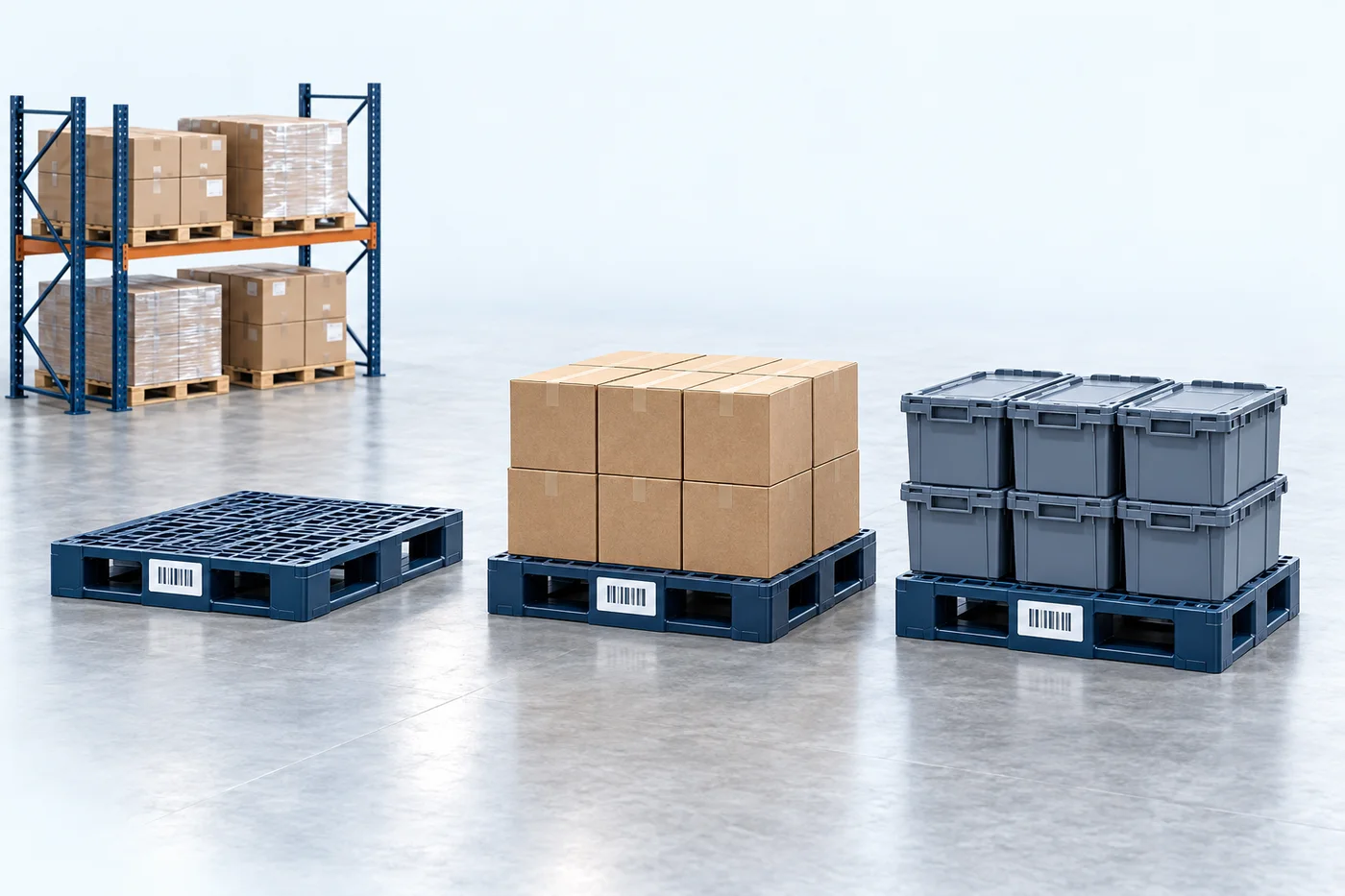
Pallet tracking connects a physical handling unit, a pallet, to a persistent digital record: what it contains, where it has been, and where it currently is. It is a different question from a stock total. A stock total says how many units exist somewhere; a pallet record says which specific physical unit holds them and what happened to that unit between creation and dispatch.
Creating Pallet Identity
A pallet record is typically created at the point the physical unit is formed, before any RFID tag is involved. That record needs a unique identifier that stays unambiguous across the systems and sites involved. Whether the WMS, the ERP or a dedicated tracking application owns this creation step is a decision that needs to be made explicitly rather than left implicit, because it determines which system is authoritative if records ever disagree.
Associating Products
Once the pallet record exists, products, containers or cartons are associated with it, along with whatever batch, lot or quantity detail the operation requires. This association is what makes the pallet record useful: an RFID tag alone identifies a pallet, but it is the software association that tells you what is actually on it.
Tag Selection
RFID tags vary considerably in form factor, frequency and durability, and the right choice depends on what the pallet carries and where it travels. A tag mounted directly on a metal container behaves differently from one on a cardboard carton, and a tag that will pass through cold storage or outdoor yards has different durability requirements than one used only indoors. Tag selection is a site-specific decision, not a default.
Fixed Readers vs Handheld Readers
Fixed RFID readers are installed at defined transition points, such as a dock door or a putaway zone, and capture reads automatically as tagged pallets pass through their read zone. Handheld readers are carried by an operator and used for tasks like searching for a specific pallet, cycle counting, or verifying a pallet's identity at a workstation. Most implementations use both: fixed readers for automatic capture at known transitions, and handheld readers for tasks that need a person to direct the read.
Putaway
At putaway, the pallet is assigned to a storage location. Where a fixed reader covers the putaway zone, the tag read can prompt or confirm the location assignment; where it does not, an operator may confirm the location with a handheld read or a barcode scan of the location label. Either way, the goal is the same: the system should have a confirmed, not assumed, storage location for the pallet.
Location Updates and Movement Detection
As pallets move between zones, subsequent reads at fixed checkpoints, or deliberate handheld reads, update the location record. This is one of the areas where RFID's hands-free read capability matters most: a well-placed reader can detect that a pallet moved from one zone to another without requiring an operator to scan anything. It is also where filtering matters most, because a tag lingering near a reader's edge, or passing an adjacent zone, can produce reads that do not represent an actual, confirmed movement. Middleware needs rules for which reads count as movements and which are noise.
Picking
When a pallet is selected against an order or a production requirement, the system checks the pallet's current record, including its content association and location, against what the order actually needs. This is where an accurate location record, established at putaway and maintained through subsequent moves, pays off: picking depends entirely on the location data being correct.
Dispatch Gates
A dispatch or yard gate is a common place for a fixed RFID reader, since it lets the system verify that the pallet being loaded matches the expected shipment before it leaves the building. This check should compare the pallet against the expected order or shipment record and raise a visible exception if it does not match, rather than treating any readable tag as automatic permission to load.
ERP / WMS Integration
Confirmed pallet events, creation, movement, picking and dispatch, are typically posted to the ERP or WMS as business transactions. A raw reader observation is not the same as a confirmed transaction: it needs to pass through filtering and validation first. Decide up front which system owns stock quantity and pallet identity, and design retry and reconciliation handling so a temporary connectivity issue does not create duplicate or missing transactions.
Common Implementation Challenges
The recurring challenges in RFID pallet tracking implementations are rarely about the tag or reader hardware in isolation. They tend to be about the software rules around them: deduplicating repeated reads of the same tag, determining the direction a pallet is moving through a portal, handling tags that are not read at all in a given pass, and agreeing which system is authoritative for pallet identity and stock quantity when more than one system is involved.
Example Architecture
A typical architecture places the RFID tag and reader at the physical layer, an integration or middleware layer that filters, deduplicates and validates reads, a pallet-tracking workflow that maintains the identity, contents and location record, and an ERP or WMS layer that receives confirmed business transactions. Each layer has a distinct responsibility, and collapsing them, for example posting raw reader data directly to the ERP, tends to produce the duplicate-transaction and phantom-movement problems that well-designed middleware exists to prevent.
Conclusion
RFID pallet tracking works because a persistent software record, not the tag itself, carries the authoritative statement of what a pallet is and where it has been. The tag makes identification easier; the surrounding workflow, filtering rules and enterprise integration are what make the tracking trustworthy.
Related Solutions
Related Implementation Examples
Discuss your workflow
Have a Tracking or Automation Requirement?
Tell us about your current workflow and what you need to track. We can help determine the right combination of software, RFID, barcode, ANPR or other technologies.