
Source material difficult to trace
A receiving record may be disconnected from the lot later consumed at a production stage.
Manufacturing Traceability
Create an auditable digital trail across raw material, work-in-progress, production operations, quality checks and finished goods.
CoEnablers connects barcode, RFID and shop-floor workflows with ERP, MES and warehouse systems to improve production traceability.
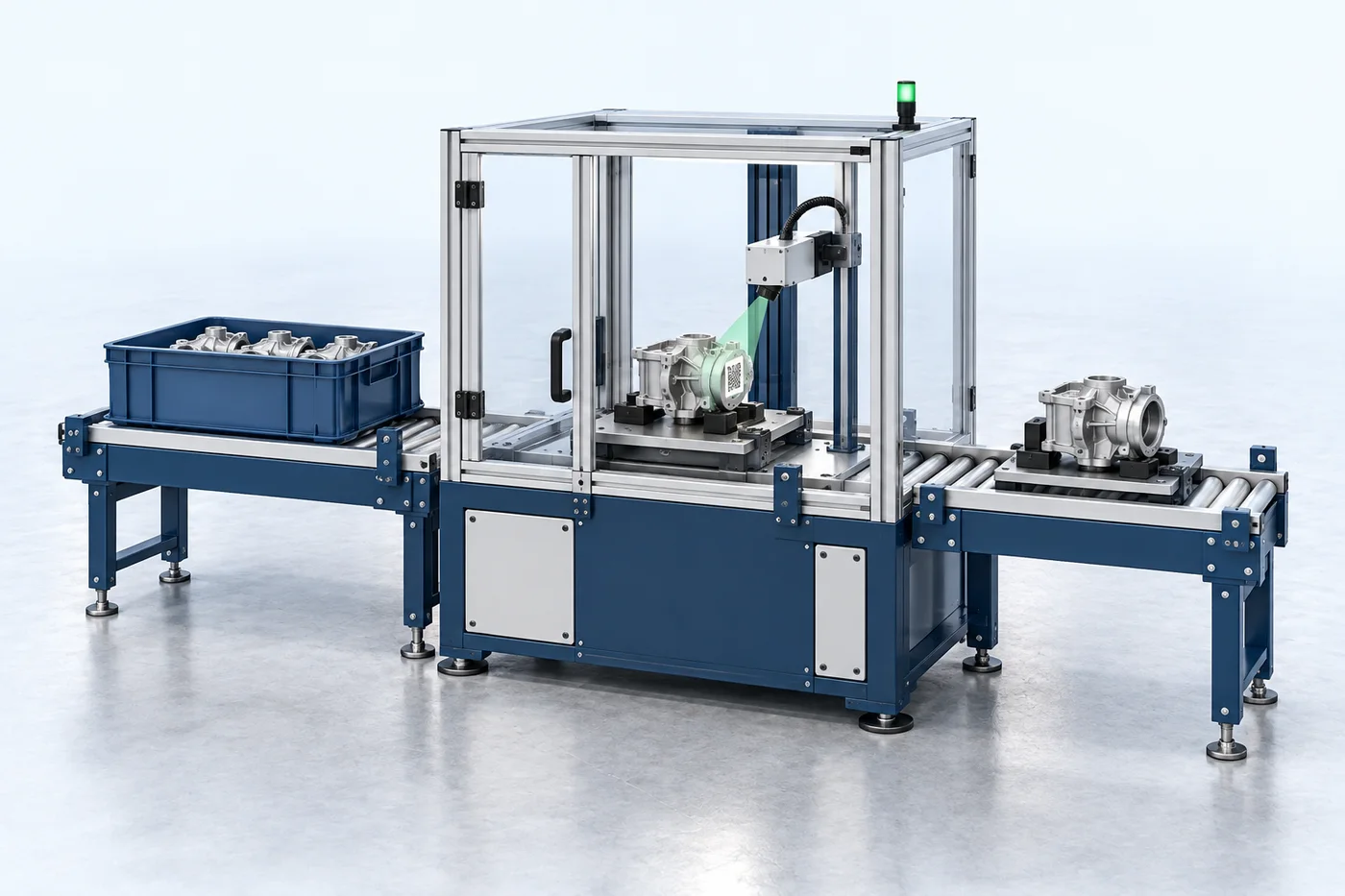
From material to output
Inputs
Preserve source identities.
Production
Capture consumption and transformation.
Outputs
Retain the relationship to inputs.
Manufacturing traceability connects identities across a process, not just the location of a label. A material lot can be issued to a production order, consumed in an operation and associated with finished output. The useful record explains those relationships together with the time, location and process context of the captured events.
CoEnablers can complement an ERP/MES by capturing physical identification and traceability events. The existing system can retain scheduling, recipes, resource planning and transaction authority. Define the handover between those systems and shop-floor capture before choosing where to scan or install readers.
Begin with the questions an investigation must answer. A backward search asks which source lots contributed to finished goods; a forward search asks which output may be associated with a source lot. Both require the relevant input-output relationships to be recorded at the time the process changes them.
A receiving record may be disconnected from the lot later consumed at a production stage.
Paper notes or retrospective entry can leave timestamps and material references incomplete.
Work-in-progress units may have a physical location without a recorded operation or status.
Input and output records may exist separately without a trustworthy association.
Inspection results may not identify the exact lot, unit or operation being assessed.
A final label may show product identity but not the consumed material relationships.
A repeated operation can overwrite prior context unless the workflow preserves it.
A production confirmation can lag behind or conflict with the physical event.
Preserve the supplier and source-lot references needed by the receiving process.
Record accepted material and its inbound references before it enters the production flow.
Assign or verify the label or tag association for the traceable unit.
Associate the issued material with the intended order, batch or operation.
Maintain identity as material moves through intermediate stages.
Capture completed work with relevant material and process context.
Associate inspection status or a result reference with the correct unit and stage.
Create the output identity and retain its connection to consumed material.
Transfer finished output with status and handling-unit references intact.
Preserve shipment associations so output can be followed beyond production.
Trace backward from finished output to source material and forward from a lot to associated output where sufficient process data is captured.
Material relationships
Source material
Consumed material reference.
Additional input association.
Transformation
Record which inputs contributed to this batch.
Output
Link accepted output to the production batch.
Preserve packaging and shipment associations.
Trace backward to inputs • Trace forward to affected output
Associate material labels or tags with inbound source records and relevant lot information.
Maintain lot context through issues, consumption and output events.
Identify intermediate units and their last confirmed process stage.
Record agreed operational events without assuming every machine supplies them automatically.
Include available operator or machine references where integrated and appropriate.
Connect inspection or hold status to the relevant unit, lot and process stage.
Define permitted state changes, repeated operations and release authority for the specific process.
Assign output references and preserve the link to production context.
Store input-output associations needed for backward and forward investigations.
Carry identity, status and packaging relationships into downstream handling.
Exchange approved traceability events with the customer's authoritative production systems.
Retain event sources, corrections and context so investigations can follow the recorded sequence.
Choose the traceable unit at each stage: a serialised item, batch, lot, container or handling unit. Where material is mixed, divided or transformed, capture the relationship and quantities at that point. Scanning only the first and last labels cannot reconstruct missing process associations later.
Rework must retain the original operation and the reason for returning to a prior stage. A quality hold should identify the affected unit and the authority required for release. These are workflow-design requirements, not assumptions that every operation uses the same state model.
Agree which system owns production confirmation, stock consumption and quality disposition. A capture application should submit an event through the approved interface and record the result. Delayed or rejected events need reconciliation without silently rewriting production history.
Assess scanning ergonomics, label survival, reader placement and operator workload on the real process. Where automatic capture is impractical, a deliberate confirmation may provide better context. The objective is usable traceability evidence, not adding a device to every station.
Link component and material identities to assembly or production stages where those associations are captured.
Record work-in-progress handovers, operation confirmations and finished-goods references.
Connect component or lot references with intermediate and finished output at the appropriate level of detail.
Support identification and record association within the site's validated process; no regulatory compliance claim is made.
Consider batch input-output relationships and packaging links, subject to the actual process and its validation requirements.
It is the ability to follow recorded material and product relationships through manufacturing. Useful traceability includes identity, process events and connections between inputs and outputs, rather than only a list of locations. The scope depends on the detail captured at each critical handover or transformation.
Genealogy is the relationship between source materials, production batches and resulting output. It can support backward tracing from finished goods and forward tracing from a source lot. A complete view requires recording the relevant consumption, transformation and packaging associations rather than inferring them from timing alone.
Yes, where appropriate interfaces and identifiers are available. The design should define ownership of production orders, material consumption, operation status and output confirmation. Physical capture events can enrich those records, while rejected or delayed updates remain visible for reconciliation.
They can be combined at suitable process points. Barcode supports deliberate operator confirmation, while RFID may capture identified transitions with suitable tags and read zones. Heat, metal, liquids, label durability and station layout need assessment before choosing the identification method.
Assign identity to the appropriate intermediate unit and capture its movement or operation status at agreed stages. That may be a container, batch or individual item. Each event should retain the production context so a location update is not confused with confirmation that an operation has finished.
They can where the process records which lots were consumed into the relevant batch or output. Splits, mixing, substitutions and rework must preserve their associations. A new identification system cannot reliably recreate relationships that were never recorded in historical production data.
Not necessarily. CoEnablers can complement an existing MES by capturing identities and traceability events. Scheduling, machine control, recipes and broader manufacturing execution may remain with the MES. The boundary should be agreed explicitly instead of treating event capture as a complete MES replacement.
Reference the quality result or status against the correct lot, unit and operation. The quality system may retain detailed test records while traceability stores the association and disposition. Define how holds, retests and releases update that relationship without deleting the earlier result or implying an automatic release.
Discuss your workflow
Share your material flow, production stages and current ERP/MES process. We can help identify where physical tracking and traceability events should be captured.