
Pallet location unknown
The system may show available stock without identifying the handling unit or last confirmed storage point.
Pallet-Level Visibility
Maintain a persistent identity and movement history for pallets across production, receiving, warehouse storage and dispatch.
Use RFID, barcode or hybrid identification depending on how and where pallets move.
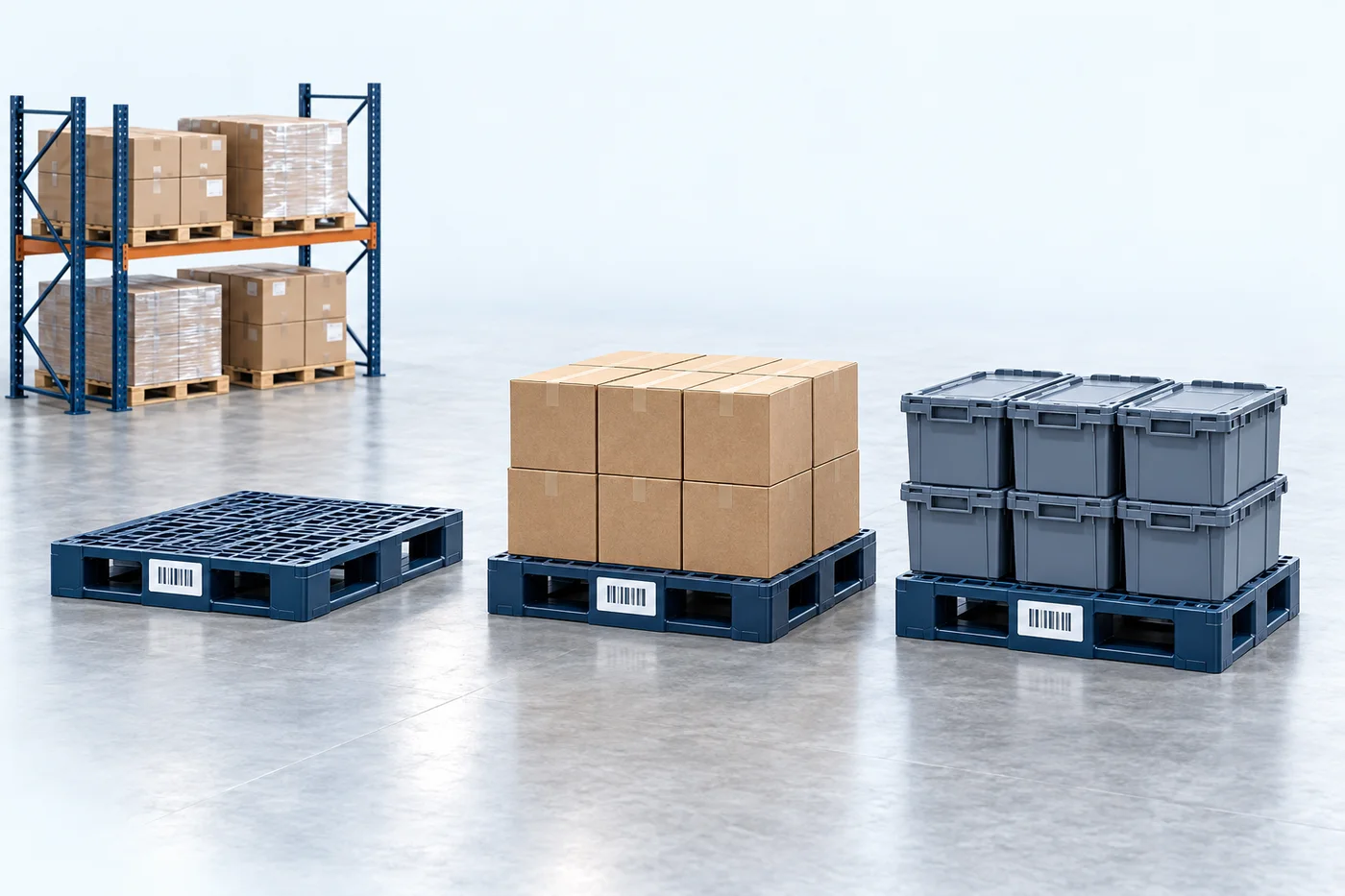
A persistent pallet identity
Lifecycle record
Assign identity and associate contents.
Record location and movement context.
Close the load while preserving its history.
Pallet tracking connects a physical handling unit to its contents, location and movement history. It answers a different question from a stock total: which pallet holds the material, where was that pallet last confirmed, and what happened to it between creation and dispatch?
Separate the identity of a reusable physical pallet from the identity of the load it carries when your process needs both. A returnable pallet may complete many journeys. Each load can have different contents, orders and destinations, while the physical carrier retains its own lifecycle.
The system may show available stock without identifying the handling unit or last confirmed storage point.
Products grouped together physically may not share a handling-unit record in software.
Transfers can happen without an event that identifies the pallet, source and destination.
A visually similar load may be selected without checking its order association.
Repacking and quantity changes can leave the pallet label inconsistent with its recorded contents.
Teams may know the current location but be unable to explain the route taken.
A staging area may contain pallets for several shipments without a validated allocation.
Create a unique pallet ID in the agreed system of record.
Scan or associate products, lots or containers to the pallet; record the relevant quantities.
Bind the physical identifier to the handling-unit record and verify the association.
Assign the pallet to a warehouse location and confirm the physical placement.
Record transfers between storage locations or operational zones.
Select the pallet against an order or production requirement.
Verify identity, contents and shipment association before release.
Close the load or begin an approved reuse cycle while retaining prior history.
Use an identity that remains unambiguous across the relevant sites and systems.
Link products or containers to a handling unit with the batch and quantity detail your process requires.
Associate physical identifiers with the pallet record and control replacements.
Record observed or confirmed locations with event context and timestamps.
Keep the sequence of transfers available for operational review.
Workflow support can be designed for pallet consolidation, split or repacking requirements; these rules need explicit scoping.
Connect pallet selection to shipment or production requirements.
Compare the outgoing pallet with expected release requirements.
Search by pallet identity or associated product, order and last confirmed location.
Retain changes to identity associations, contents and movement records for investigation.
Technologies
Operators scan the pallet and location at defined tasks. This provides deliberate confirmation where the label can be reached and read.
Operators collect suitable tagged pallet observations during search, counting or verification tasks. The software still supplies task and location context.
Reader infrastructure captures observations at configured transitions. Direction, filtering and shipment checks determine whether a movement may be confirmed.
A pallet record must explain what changed when material is removed, added or moved to another pallet. Where consolidation or split workflows are required, define the source units, destination units, quantities and approval rules. Retain those relationships instead of replacing the old contents with an unexplained new list.
At dispatch, distinguish identifying a pallet from validating that pallet for a shipment. The check may include its order association, quality status, expected contents and permitted staging location. Exceptions need a visible review path when a pallet is correct physically but its enterprise record is not ready for release.
Agree whether ERP or WMS creates the handling-unit identity and owns inventory quantity. A successful reader observation is not a successful posting. Record the business response and handle retries so the same pallet movement does not become multiple stock transactions.
Associate packaged output with a handling unit before the warehouse handover, preserving the finished-goods reference.
Keep inbound identity and lot references available as material moves from receiving to stores.
Keep customer ownership and handling-unit references clear across shared warehouse operations.
Relate pallet content to component and container records where the material flow requires it.
Separate carrier identity from the load cycle when containers return for reuse.
Validate pallet-to-shipment association when loads move into or out of staging lanes.
It is the recording of pallet identity, contents and operational events through a handling-unit journey. The record links storage and movement context to the load rather than only counting products. The detail captured depends on whether you need pallet location, shipment verification, reusable-carrier history or all three.
Use the agreed identifier scheme and authoritative system, which may already be the WMS or ERP. The process should prevent duplicate assignment and govern reprints and replacements. Where an external logistics identifier is required, align the encoding with the relevant business requirements instead of inventing a separate incompatible ID.
A pallet record can be designed to hold multiple product or container associations, including batch and quantity information where needed. Mixed pallets require clear checks for additions, removals and repacking. The printed or encoded identifier typically points to the software record rather than carrying the complete contents history.
Yes, both can map to the same handling-unit identity. Barcode can support deliberate checks while RFID captures selected transitions. The software must reconcile these observations and apply transaction rules so a portal read and a manual scan do not confirm the same movement twice.
Location can come from an operator scanning a destination or from a validated read zone tied to a known transition. Store the source and time of that confirmation. A last-known warehouse zone should not be described as continuous positioning when the system has no observations between capture points.
They can support automatic capture when tagged pallets pass a suitably designed read zone. The integration must distinguish relevant reads, handle repeats and establish the movement context. Materials, tag placement, nearby inventory and the physical route need site testing before automation can be confirmed.
Integration can exchange pallet identity, contents, location and validated movements through interfaces available in the customer's environment. Agree which system owns handling-unit creation and stock posting. Failed updates need reconciliation so the physical pallet record and enterprise inventory do not silently diverge.
Compare the identified pallet with the expected shipment or order and any required status checks. A workflow can ask an operator to resolve an unexpected pallet, incomplete load or posting rejection. Dispatch confirmation should follow the agreed release rules rather than treating any readable tag as permission to ship.
Discuss your workflow
Tell us how pallets are created, stored, moved and dispatched in your operation. We can help design the right identification and tracking workflow.