
Plate event must reach backend software
A camera recognizing a plate is not the same as that event reaching the systems that need it.
Implementation Example
Implementation ExampleTurning camera plate-recognition events into structured, validated business events for gate, yard and dispatch workflows.
A representative implementation pattern based on established ANPR integration workflows, not a named customer deployment.
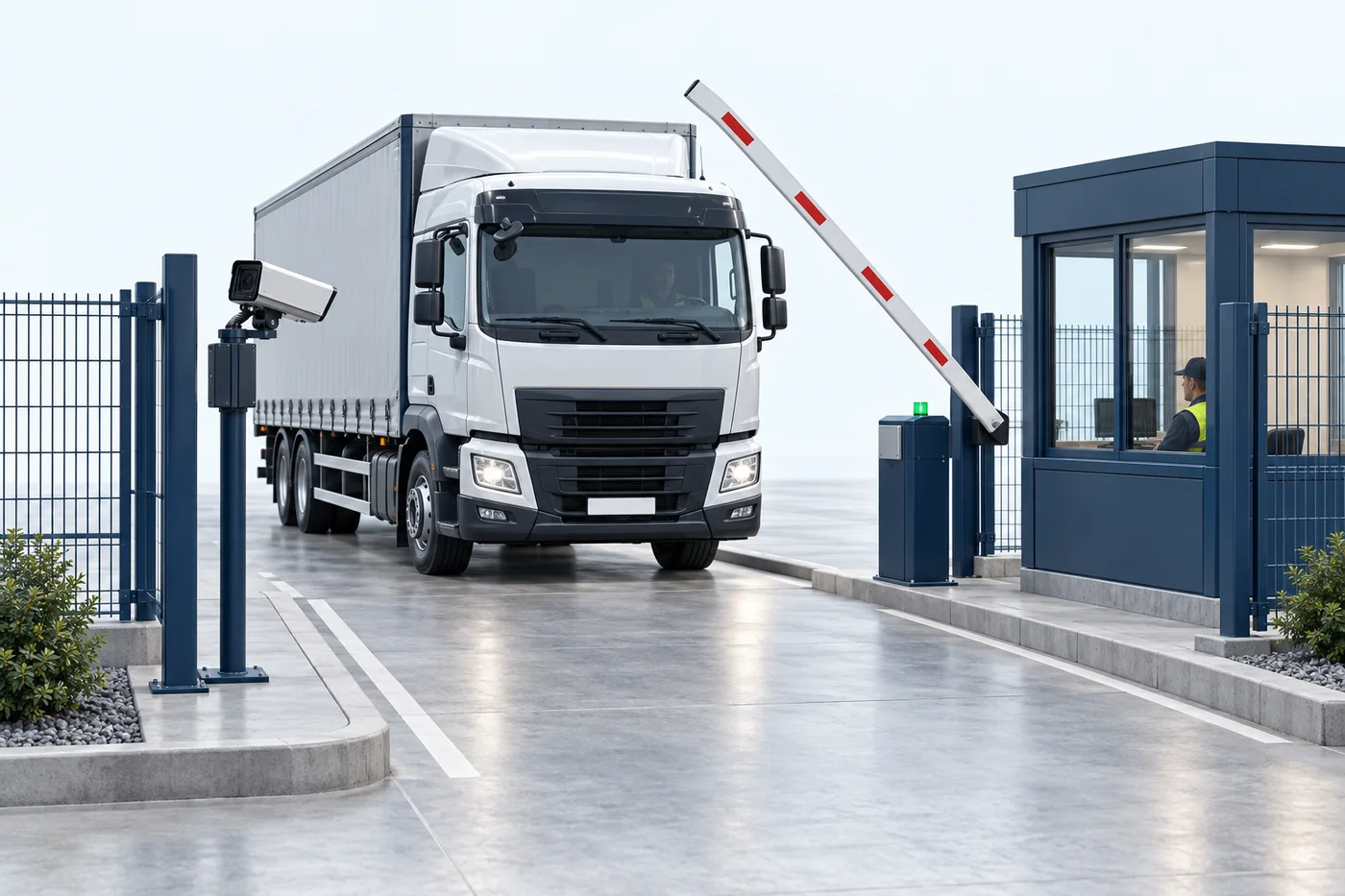
From plate recognition to business event
Event pipeline
A camera recognizing a plate is not the same as that event reaching the systems that need it.
A plate read needs to be associated with a vehicle and, where relevant, an expected visit or shipment.
The same vehicle passing a camera can generate more than one recognition event that needs filtering.
How a camera exposes its recognition events differs by manufacturer and model.
Many sites already operate ANPR cameras at a gate or yard entrance, often supplied with the camera's own viewing software or a network video recorder. The camera can recognize a plate and log it locally, but that log is not automatically visible to the gate, yard or backend systems that need to act on it.
Where an operator does watch the camera feed, gate or yard decisions are still made by a person reading a plate, rather than the recognition event automatically reaching a system that can confirm whether the vehicle is expected and what should happen next.
Because no structured event leaves the camera environment, correlating vehicle movements with dispatch, delivery or visit records after the fact is difficult and typically manual.
Plate, timestamp, camera identity and direction captured in a consistent, structured format.
A way to reduce repeated recognitions of the same pass into one meaningful event.
A check of the recognized plate against an expected vehicle, visit or shipment record.
A defined action, such as a gate-open request or a yard-movement record, tied to a validated event.
The approach introduces an adapter layer between the camera environment and backend applications. Rather than each application integrating with a specific camera's proprietary interface, the adapter normalizes recognition events from the supported interface, whether that is an HTTP webhook, a vendor API, an SDK or an FTP-delivered event file, into one consistent event format.
That normalized event is then checked for duplicates within a configured time window, matched against an expected vehicle or visit record where one exists, and passed to the relevant business workflow, such as a gate-open request, a yard-movement record or a dispatch confirmation.
Because the backend workflow only ever sees the normalized event, adding or replacing a camera model changes the adapter configuration rather than the business logic that consumes vehicle events.
A vehicle enters the camera's field of view at the gate or yard entrance.
The camera recognizes the plate and produces a recognition event.
The event reaches the adapter through the camera's supported interface.
The adapter converts the vendor-specific event into a consistent structured format.
Repeated recognitions of the same pass are grouped into one event.
The event is checked against an expected vehicle, visit or shipment record.
A validated event triggers the relevant action, such as a gate-open request.
The resulting business event is recorded in the relevant backend application.
Camera recognition events become structured, consistent events usable by backend applications.
A recorded sequence of validated entry, exit and yard events.
Gate, yard or dispatch workflows can be triggered from a validated plate event rather than a raw camera log.
Adding or replacing a camera model changes the adapter configuration rather than the backend business logic.
The camera must be reachable on a network path the adapter can use, which affects deployment topology.
Secure delivery of events may require HTTPS endpoints and firewall rules agreed with site IT.
Not all cameras expose a webhook, API or SDK; the available interface depends on the specific vendor and model and needs confirming before design.
The same pass can generate multiple recognition events, and determining direction of travel depends on camera placement and configuration.
Whether the adapter runs on-site or in the cloud affects latency, connectivity dependencies and data residency, and needs deciding per site.
Discuss your workflow
Tell us which cameras are in place or planned, and what gate or yard workflow needs to happen when a plate is recognized. We can help evaluate the right integration method.